


The scale of Qatar’s urban development programme under National Vision 2030 is redefining what access control and workforce attendance infrastructure needs to look like. A development like Lusail City, designed to accommodate close to half a million residents, workers, and visitors across 19 multi-purpose districts, cannot be managed with the same credential architecture that serves a single corporate tower. Specifying an access control system in Qatar for these environments means thinking at a scale and with an interoperability requirement that most conventional deployments never encounter. The organisations building and operating these facilities are finding that only enterprise-grade biometric and access management platforms can meet that requirement from the outset.
Doha moved from 59th to 48th in the IMD Smart City Index between 2023 and 2024, reflecting Qatar’s accelerating investment in digital and smart infrastructure — ResearchGate / Smart Cities and Sustainability: Comparative Analysis and Strategic Insights for Qatar, 2024
How Qatar’s Mega-Projects Are Setting New Access Control Standards
Lusail City’s smart services specification explicitly includes access control for residential and commercial zones, marina security management, and integrated fire detection systems as core components of the city’s digital infrastructure. This is not access control as an afterthought added during fit-out. It is access control as infrastructure, planned alongside power, water, and communications at the city design stage.
Msheireb Downtown Doha, the world’s first sustainable downtown regeneration project representing a $5.5 billion investment, takes the same approach. Five mixed-use quarters encompassing offices, luxury residential, retail, cultural institutions, and government space require a credential architecture that can move the same individual through different zones with different permission profiles, while maintaining an audit trail that satisfies the compliance requirements of multiple tenants and operators simultaneously.
Msheireb Downtown Doha was developed with a $5.5 billion investment as part of Qatar’s smart city strategy, integrating digital infrastructure across five mixed-use quarters encompassing government, residential, retail, and cultural facilities — ResearchGate / Smart Cities Strategies in Developing Countries: The Case of Lusail City, Qatar, 2022
The Credential Scale Challenge
The operational difference between a corporate campus access control deployment and a Lusail or Msheireb-scale project is primarily a credential management problem. A single mixed-use block at Lusail might have thousands of active credentials across residential, retail, commercial office, and service workforce populations, each with different permission profiles, different time-of-day restrictions, and different renewal cycles.
A biometric door access control system that manages credentials through a centralised platform handles this at scale in a way that distributed or siloed systems cannot. Role-based permissions are defined once and applied to every credential of each type. A departing retail employee’s access is removed from every reader in every zone simultaneously. A contractor’s temporary credential expires automatically. The administrative overhead of managing this at a single-site scale is significant. At Lusail-scale, it becomes unmanageable without enterprise-grade infrastructure.
This is where a biometric access control system platform earns its place not just as a security tool but as a facility management necessity. Adax Business Security Systems designs and deploys access control systems that scale from a single Doha office to a multi-building development, configuring role-based permissions and credential lifecycle management as a unified platform from the outset.
Automatic Barrier Arm Gates and Perimeter Control at Scale
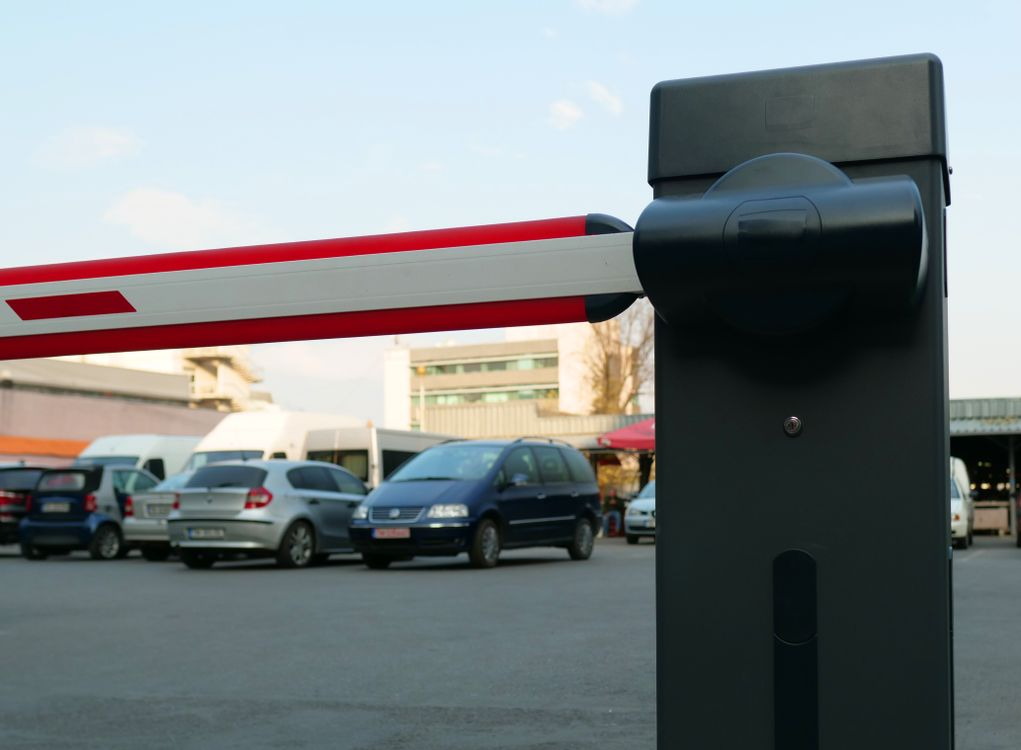
Qatar’s large-scale developments also set new requirements for perimeter and vehicle access control. A development with multiple residential towers, a marina, commercial districts, and underground parking across a large site needs automatic barrier arm gates integrated with the same credential platform as pedestrian access control, rather than a separate vehicle management system that requires its own administration.
When automatic barrier arm gates integrate with the biometric access platform alongside any smart attendance system managing the same workforce, a resident’s credential opens the parking barrier and their apartment floor. A delivery vehicle’s time-limited credential authorises access to the loading bay between defined hours. A VIP visitor’s credential is issued at the concierge, opens the lobby, grants lift access to the right floor, and expires when their appointment ends. The credential is one system. The physical enforcement points, barriers, turnstiles, and doors are all managed from one platform.
Time Attendance Infrastructure for Large Contractor Workforces
Qatar’s mega-projects also employ enormous contract workforces during both the construction and operational phases. Managing time attendance for thousands of workers across a large site, with multiple contractors and shift patterns, requires infrastructure that produces tamper-proof records against verified individual identities rather than manual sign-on sheets or badge swipes.
A time attendance system using biometric authentication produces the kind of audit-ready records that Qatar’s Ministry of Labour expects, much like a fingerprint time attendance system delivers for conventional enterprise deployments, applied here across multi-contractor site populations numbering in the thousands.
As Qatar develops its smart city infrastructure, the workforce management requirements that come with it are driving the adoption of biometric attendance at a scale that was not commercially relevant five years ago. A cloud attendance system connected to biometric terminals at every site gives facility managers the real-time cross-site visibility these large developments require.
Work With Adax Business Security Systems on Your Next Qatar Deployment
Adax Business Security Systems is a Doha-based specialist in access control, biometric attendance, and barrier infrastructure for corporations and government offices across Qatar and the GCC. The team has worked on projects across Qatar’s commercial, government, and industrial sectors, with the technical depth to manage deployments from a single Doha facility to a multi-site development spanning the country.
For organisations involved in Qatar’s Vision 2030 development programme, the right time to engage is at the specification stage. Adax Business Security Systems works with developers and operators before any hardware is selected, helping define credential architecture, integration requirements, and scalability parameters that will support the project from handover through to long-term operation.
To discuss deploying the right access control system in Qatar for a Vision 2030-aligned project, barrier infrastructure, or biometric attendance deployment, contact the Adax Business Security Systems team directly. The team provides a no-obligation site assessment and system recommendation tailored to the specific requirements of each facility