

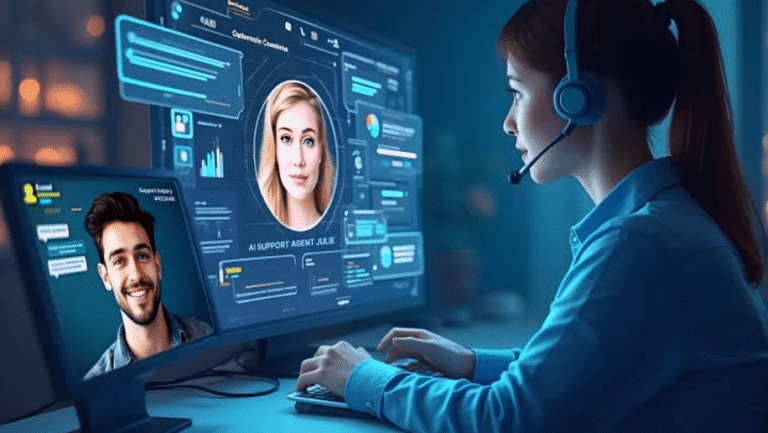
As businesses grow, operational tasks multiply. Sorting emails, updating CRM records, replying to routine queries, scheduling social posts, and following up with leads consume hours every day. While necessary, these activities rarely require deep human creativity. This gap has led to the rise of AI workforce platforms built to handle repetitive execution efficiently.
One such platform is Dooza AI, which introduces the concept of “AI employees” — role-based AI agents that perform routine business tasks autonomously within existing tools. Instead of acting like a chatbot or writing assistant, Dooza AI positions AI as a digital worker assigned to specific responsibilities.
What Is Dooza AI?
Dooza AI is an AI workforce automation platform designed to execute operational functions through predefined AI roles, such as:
- Email management and sorting
- Social media scheduling and responses
- Lead follow-ups
- Customer support for standard queries
- Appointment scheduling
- CRM updates and data entry
The aim is to delegate predictable, rule-based work to AI systems that run continuously in the background.
From AI Tools to AI Employees
Most AI tools are interaction-based — they respond when prompted. AI employees follow a different model:
- Assigned a clear role
- Connected to business software
- Given routines and rules
- Performing tasks automatically
- Requiring minimal supervision
This shifts AI from a reactive assistant to a proactive executor.
How Dooza AI Works
Operationally, the platform follows a simple flow:
- Select a role (email manager, support assistant, social media handler, etc.)
- Integrate tools like email, CRM, calendars, and social platforms
- Set instructions for how tasks should be handled
- Allow autonomous execution while monitoring outcomes
This no-code approach makes AI workflow automation accessible to non-technical teams.
Why AI Workforce Platforms Matter
Common operational bottlenecks include:
- Managing inbox overload
- Slow lead responses
- Inconsistent social engagement
- Repetitive customer replies
- Manual CRM updates
These tasks are repetitive and rule-driven, making them suitable for AI task automation rather than additional hiring.
See also: Emerging tech trends revolutionizing modern security measures
24/7 Operational Continuity
AI employees can operate without breaks. Activities like email sorting, follow-ups, post scheduling, and record updates can continue outside working hours, ensuring faster response cycles and uninterrupted operations.
Important keywords: 24/7 AI automation, continuous automation
Use Cases Across Businesses
AI workforce automation can support:
- Startups managing operations without expanding teams
- SMBs handling support and admin tasks efficiently
- Agencies managing repetitive client work
- Entrepreneurs running daily operations with less manual effort
- E-commerce automating customer communication
Working Within Existing Tools
Dooza AI integrates with commonly used platforms:
- Email services
- CRM systems
- Calendars
- Social media tools
- Marketing platforms
This allows AI employees to function within current workflows without disruption.
Optimizing Human Effort
AI employees are meant to reduce operational load so teams can focus on strategy, creativity, and customer relationships. By automating routine work, businesses can reallocate human effort to higher-value activities.
Conclusion
Dooza AI represents a shift from using AI as a tool to using AI as part of the operational workforce. Through role-based automation, tool integration, and autonomous task execution, AI employees help businesses manage routine work more efficiently.
As organizations seek scalable ways to improve productivity, AI workforce platforms like Dooza AI highlight how digital workers can support modern business operations.