

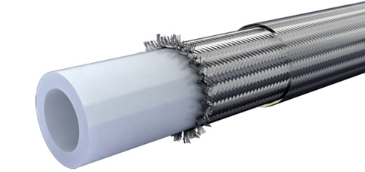
Most hose failures on a chemical line are decided before installation, at the moment someone picks a size and moves on. The fluid being transferred, its temperature and the way the line moves all shape what a teflon hose must survive. Two assemblies that look identical can behave very differently in service.
Selection works better in the opposite order. Naming the chemical first, then the temperature, pressure and routing, narrows the field before any catalogue is opened to select the hose. A teflon hose built around the specific medium it carries gives a plant a transfer line that resists chemical attack, holds pressure and protects product purity across long production runs.
Why the Chemical Comes First
The Detail Most Enquiries Leave Out: A hose specification becomes reliable only once the chemical name, its concentration and its working temperature are written down before any material is proposed. Many enquiries arrive with a size and a length and little else, which forces a supplier to guess the composure of the hose, and a guess on a corrosive line rarely stays hidden.
When Small Compromises Become Shutdowns: A hose chosen on price or availability alone usually performs well for a few weeks, which is exactly what makes the compromise dangerous. In everyday plant practice, maintenance teams routinely find that a line left on a marginally compatible hose degrades quietly until a weep appears at a fitting during transfer.
See also: How Implementing Life Care Planning Services Enhances Patient Outcomes
Aggressive Media from Weak Acids to Molten Sulphur
Where Chemical Resistance Is Tested Hardest: Weak acids, chlorine, acetyl chloride, ammonium nitrate, oleum and molten sulphur sit at the difficult end of fluid transfer, because each attacks common elastomers in a different way. A teflon hose resists that whole range of media, which is why it stays the practical choice when one line has to carry several aggressive chemicals.
Why Concentration Changes the Answer: Compatibility is judged by the combination of medium, concentration and temperature, never by the chemical name alone. Oleum behaves differently when warm than it does at ambient conditions, and molten sulphur brings a heat load a cool acid never imposes. Recording the full duty cycle prevents approval on partial information.
Temperature, Pressure and Bend Radius Shape the Choice
Temperature Range as the First Filter: PTFE lining carries a wide working range, from deep sub-zero conditions to around 260 degrees Celsius, though the braid, cover and fittings around it may not share that span. Thermal expansion at the upper end changes clearance at the coupling, so the assembly has to be rated as one unit.
Diameter, Pressure and Bend Radius Together: Bore diameter sets flow velocity, working pressure sets the braid and wall requirement, and minimum bend radius decides whether a hose can follow its route without kinking. A line forced around a tighter curve than its rating allows loses pressure capacity straight away, long before any damage shows on the cover.
Smooth Bore and Corrugated Bore Compared
Smooth Bore for Purity and Flow: A smooth bore teflon hose gives an unbroken internal surface that drains cleanly and leaves little residue behind, which suits food, pharmaceutical and fine chemical duties where carryover between batches is unacceptable. It holds pressure well and keeps flow resistance low, though it is less forgiving when the route demands tight bends.
Corrugated Bore for Tight Routing: A corrugated bore trades a little flow efficiency for flexibility, bending to a shorter radius and absorbing movement on lines that shift between fixed points. The convolutions can hold a small amount of residue, so the decision usually comes down to whether the duty values drainage or freedom of movement.
What a Matched Hose Returns over Its Service Life
Replacements Avoided over a Service Life: A correctly specified assembly usually outlasts several cheaper substitutes on the same line, and total cost of ownership tells that story more honestly than the purchase price. Unplanned downtime, lost product, clean-up and labour after a failed transfer never appear on the original quotation, yet they dominate the real figure.
Certification Held Steady over Time: Certification value depends on the hose staying inside the conditions it was approved for, because material records, pressure ratings and test certificates describe that duty and nothing wider. Lines that drift outside those limits leave an audit trail that no longer matches the hose actually installed on the line.
Checks Worth Running before Approval
A short review before purchase catches most of the problems that surface later in service. The points below cover what a specifier should confirm before a teflon hose is released to a plant, and they apply equally to a new installation and to a like for like replacement on an existing line.
- Record the chemical, its concentration and its working temperature before any material is proposed.
- Rate the line on peak operating pressure, not the average the process usually runs at.
- Check minimum bend radius against the real routing, since installed runs are often tighter than drawings.
- Match end fittings to the same chemical and temperature duty as the lining.
- Include cleaning and steam cycles in the specification, since they load a hose hard.
Building a Transfer Line You Can Trust
A hose that matches its chemical and conditions quietly does its job for years, protecting product, equipment and uptime. Every month a marginal assembly stays in service, the options narrow and the cost of putting it right grows. Share the medium, temperature and pressure of your line with a technical team and get the specification confirmed before the next replacement is ordered.