

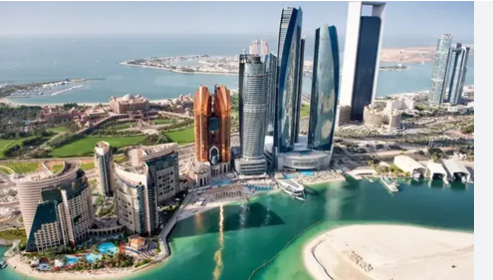
The momentum behind green office space in Abu Dhabi has been building for several years, driven by a convergence of regulatory ambition, occupier expectation, and investor recognition that environmental performance is no longer a differentiating feature of the most progressive commercial assets but an increasingly non-negotiable dimension of what it means to compete credibly in the prime market. As Q1 2026 unfolds, the trajectory of this trend is accelerating rather than stabilising, and its implications for how commercial space is developed, leased, managed, and valued deserve careful and well-informed attention.
For investors, occupiers, and developers engaged with Abu Dhabi commercial properties, the green office space landscape entering 2026 represents both a genuine opportunity for those who have positioned their assets ahead of the curve and a growing challenge for those whose environmental credentials have not kept pace with the expectations that the market is now applying with increasing consistency and rigour.
The Policy Foundation Driving Green Office Demand
The appetite for green office space in Abu Dhabi does not exist in a regulatory vacuum. The UAE’s broader commitment to sustainability, expressed through its national net zero ambition and the specific environmental targets that flow from it, creates a policy environment that actively supports and reinforces the market preference for environmentally certified commercial space. Government entities and semi-government organisations, which represent a meaningful segment of the Abu Dhabi office occupier base, are increasingly required to occupy space that meets defined environmental standards, creating a layer of policy-driven demand for certified green offices that complements the market-driven preference of private sector occupiers.
This policy foundation gives the green office trend a degree of structural durability that purely market-driven trends sometimes lack. Even in periods when general commercial demand softens, the policy-anchored component of green office demand provides a degree of resilience that non-certified assets cannot access, reinforcing the investment case for environmental certification as a long-term asset quality consideration rather than a short-term marketing advantage.
What Occupiers Are Actually Requiring
The occupier demand for green office space in Abu Dhabi as Q1 2026 develops is increasingly specific rather than generic. The early stages of the green office trend were characterised by a general preference for environmentally aware buildings, but the sophistication of occupier requirements has grown considerably as corporate sustainability commitments have become more detailed and more publicly accountable.
International firms with group-level carbon reduction targets need to demonstrate that their Abu Dhabi operations are housed in buildings whose energy performance contributes to rather than undermines those targets. This requirement produces a very specific demand for buildings with credible, independently verified certification whose environmental performance data can be incorporated into corporate sustainability reporting. The certification itself is necessary but not sufficient. Occupiers are increasingly asking for ongoing performance data that demonstrates the building is actually delivering the environmental outcomes its certification represents.
The Supply Response and Its Quality Spectrum
The commercial real estate development community in Abu Dhabi has responded to the growing demand for green office space with a pipeline of certified and sustainability-focused projects that is expanding the supply of genuinely green commercial space across the emirate’s established and emerging commercial districts. The quality of this response, however, is not uniform, and the distinction between buildings that are genuinely high-performing on environmental metrics and those whose green credentials are more cosmetic than substantive is one that sophisticated occupiers and investors are becoming increasingly capable of identifying.
Buildings that have achieved recognised international green certifications through a rigorous independent assessment process carry considerably more credibility than those whose environmental positioning rests primarily on self-reported performance or the presence of selected green features without a comprehensive certification framework. As the market for green office space matures through Q1 2026, the premium attached to genuinely certified, genuinely high-performing assets is becoming more pronounced, while the discount applied to greenwashed alternatives is growing correspondingly.
Investor Implications of the Green Premium
For investors in Abu Dhabi’s commercial property market, the rise of green office space creates a clear and growing imperative to assess the environmental credentials of their assets with the same rigour they apply to lease terms, tenant covenants, and location quality. Buildings with strong and credible green credentials are demonstrating superior occupancy performance, stronger rental growth, and greater resilience to the competitive pressures that less well-specified assets face in a market where quality-motivated occupiers have increasing choice.
The cost of retrofitting assets to meet green certification standards is real and in some cases substantial, but the alternative, allowing assets to fall progressively further behind the environmental expectations of the prime occupier market, creates a compounding obsolescence risk whose long-term consequences for asset performance and capital value are considerably more significant than the cost of proactive investment in environmental improvement. The investors who engage with this reality earliest are consistently those who find themselves best positioned as the green premium in Abu Dhabi’s commercial market continues its upward trajectory through 2026 and beyond.