

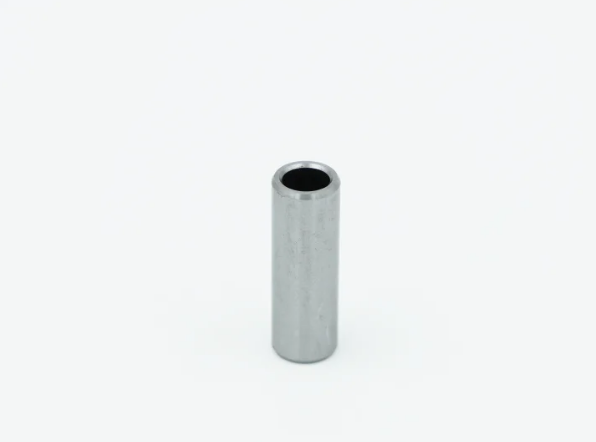
If you design or source parts for high-load engines, you already know how much work happens at the small end of each connecting rod. The piston pins fitted there carry combustion force on every power stroke and add to the moving mass which the engine accelerates and stops thousands of times a minute.
Well-designed piston pins give engine builders a part which holds its shape under peak cylinder pressure while keeping reciprocating mass as low as the duty allows. That balance comes from wall thickness, bore profile, material grade and finishing quality. Keep on reading to know more about how each choice supports consistent engine operation.
Each Pin Carries Combustion Force and Moving Mass
Load Path through the Small End: A gudgeon pin transfers force from the piston crown to the connecting rod, and that force changes direction during each engine cycle. So, the pin acts as both a short beam and a bearing surface. Engineers size piston pins to stay straight and round under peak load using only the steel which the job needs.
Early Decisions Keep Options Open: Pin sizing is easiest to optimise alongside the piston and connecting rod design. If it waits until those parts are finished, then boss and small-end diameters are already fixed and the available choices narrow. In everyday engine development, engineers often find that pins settled early reach the weight target with fewer design iterations.
See also: Reliable IT Asset Disposition Services for End-of-Life Technology
Wall and Bore Design Balance Strength and Weight
Wall Thickness and Shape Retention: A thicker wall keeps the pin round and straight under high cylinder pressure, while a thinner wall saves weight. Stiffness depends on the steel’s Young’s modulus and on how much steel sits near the surface, so a hollow pin carries heavy loads with modest mass. A heavy-duty diesel will probably need thicker walls than a petrol engine of similar bore.
Tapered and Stepped Bores: A tapered or stepped bore removes steel from the pin ends, where bending moments are lower, and keeps full wall thickness at the centre. This lowers reciprocating mass and leaves strength where the connecting rod applies its load. Lighter pins reduce inertia forces at high engine speed, so bearings run under steadier conditions.
Matching Material and Hardening to Engine Duty
Choosing the Steel Grade: Many piston pins are made from case-hardening alloy steels, which combine a hard surface with a tough core after heat treatment. Designers compare the core and surface strength of each grade, because a stronger steel allows a thinner wall for the same load. High-performance engines sometimes use higher alloy grades for this reason.
Hardening Matched to Speed and Load: Carburising gives a pin a deep, hard-wearing case which suits heavy loads and long duty cycles. Nitriding forms a thinner hard layer at a lower process temperature, which helps finished pins hold their size. If an engine runs at high speed, then case depth and surface hardness are chosen together for a smooth running surface.
Choosing between Floating Styles and Bore Designs
Fully Floating versus Semi-Floating Pins: A fully floating pin turns freely in the piston bosses and the rod small end, with circlips holding it in place. This spreads rotation across two bearing surfaces, which suits high-load engines. A semi-floating pin is clamped in the rod and pivots only in the piston, which simplifies assembly for many passenger car engines.
Straight versus Profiled Bores: A straight cylindrical bore is the simplest pin design to produce in volume. It suits engines where weight targets are moderate, and a value engineering review often confirms it as the economical choice. If instead the engine runs at high speed and reciprocating mass is tightly budgeted, then a tapered or stepped bore is probably worth the extra machining time.
Precision Finishing Delivers Consistent Engine Running
Grinding and Lapping to Size: Precision grinding followed by lapping or superfinishing gives the pin its final diameter, roundness and surface finish. These steps let the pin slide smoothly in its bosses and hold a consistent clearance. Manufacturers measure these dimensions at regular intervals throughout production, so each batch stays close to the drawing across long runs.
Consistent Pins Support Long Service: Pins held to tight diameter and roundness limits keep running clearances even, which supports quiet operation and long service intervals. Controlled heat treatment and batch inspection add to this, because every pin in a set behaves the same way. Across a fleet, this consistency probably means more productive hours and predictable service planning.
A Buyer’s Checklist for High-Load Engine Pins
Details to Confirm on the Drawing: A complete pin drawing states every dimension, material and treatment which affects how the pin carries load and runs in its bosses. When these details are agreed early, piston pins arrive ready for assembly and match the engine’s weight and strength targets. The points below cover what buyers often confirm before ordering.
- Outside diameter, roundness and surface finish limits belong clearly on the drawing.
- Wall thickness and bore profile should reflect engine speed and cylinder pressure.
- Case depth and surface hardness should suit the duty cycle.
- Retention style should match the piston and connecting rod design.
- Naming ISO 18669 on the drawing keeps specification terms consistent.
Balanced Pins Keep High-Load Engines Running Smoothly
A well-balanced pin gives your engine the strength to carry peak combustion load with no more moving mass than the design needs. Settling the specification now is simpler than revisiting pistons and rods later. Get in touch with a precision pin manufacturer today to discuss the dimensions, material and finish which your next engine programme requires.