

Most hospitalists didn’t spend twelve years in medical school to spend another two hours every evening catching up on charge entry. Yet in practices without deliberate, well-designed charge capture systems, that’s exactly what happens, and the revenue leakage it produces is matched only by the burnout it accelerates.
Establishing charge capture best practices isn’t about adding more to already full plates. It’s about redesigning the process so that accurate documentation happens efficiently, charges are captured completely, and providers can finish their days without the weight of unfinished administrative work following them home.
Understanding the Real Challenge
Charge capture for hospitalists is genuinely complex. It involves navigating time constraints between rounds, admissions, and direct patient care. It means operating across multiple facilities, each with its own systems and protocols. It requires staying current with constantly evolving coding requirements and payer rules. And it happens across a chain of handoffs between providers, billing teams, and facility staff where important details can get lost or misinterpreted at any point.
These aren’t organizational failures. They’re structural features of inpatient medicine that any effective charge capture approach has to account for directly.
Align Your Team Around Clear Roles
The single most common source of charge capture failure isn’t technical. It’s human: providers, nurses, coders, billing staff, and administrators all touching different parts of the same process without a shared understanding of who owns what and when.
Establishing clear protocols that everyone understands and can follow consistently eliminates the guesswork that causes handoffs to fail. When every person in the chain knows their role, how their output connects to the next step, and what “done correctly” looks like for their part, the whole chain runs more smoothly. Miscommunications drop. Delays shrink. Revenue that used to fall through the gaps gets captured instead.
Document in Real Time, Not at the End of the Day
The best time to capture a charge is immediately after the encounter, when clinical details are fresh and specific. End-of-day charge entry from memory is one of the most reliable ways to miss services, undercode encounters, and produce documentation that doesn’t fully support the billed level of service.
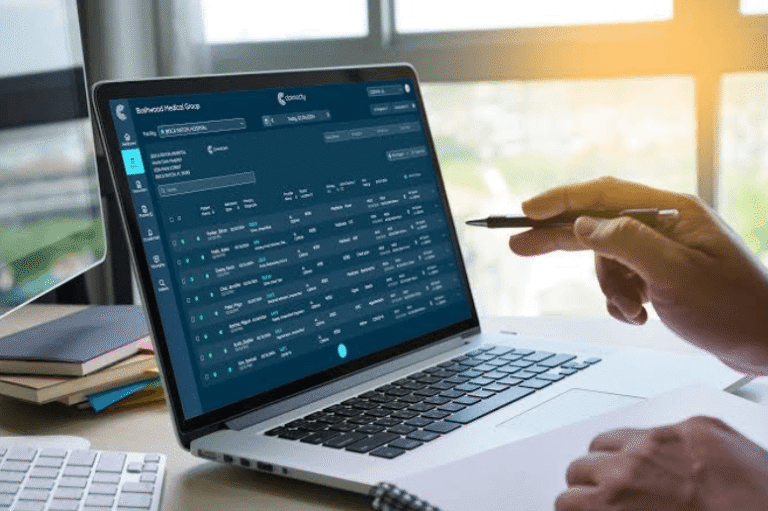
Modern mobile applications that integrate with existing EHR systems make real-time documentation practical rather than aspirational. A provider can document an encounter on a phone or tablet at the bedside, in the hallway, or between rounds, without needing to be at a workstation. That immediacy produces more complete, more accurate charge entry without consuming more of the provider’s total time.
Use Regular Audits to Stay Ahead of Problems
Waiting for denial rates to spike before investigating charge capture quality is an expensive strategy. Targeted quarterly audits, examining charge completion rates, documentation quality, coding accuracy, and denial patterns, surface recurring issues while they’re still correctable at the process level rather than fixable only one claim at a time.
Metrics worth monitoring include how long it takes to submit charges after encounters, how often claims get denied for documentation-related reasons, and which providers or encounter types generate the most charge lag. These patterns, identified and addressed early, prevent small inefficiencies from compounding into meaningful revenue losses.
Leverage Technology to Carry the Repetitive Load
The most impactful shift in modern charge capture is the emergence of AI-powered tools that review clinical notes, identify billable events, and suggest appropriate codes automatically. These systems handle the repetitive, pattern-recognizable work of connecting clinical documentation to billing codes, which is exactly the kind of task where human performance degrades under volume and fatigue while automated performance remains consistent.
When a provider documents an encounter normally in their EHR, an AI-powered charge capture system can review those notes, extract the relevant billable information, and suggest codes for review before claims are submitted. The provider reviews and approves rather than manually constructing the charge from scratch. The result is faster charge capture, more complete service documentation, and substantially fewer missed charges.
See also: How Floating Pond Fountains Improve Water Quality and Ecosystem Health
Bringing It All Together
The practices achieving the best charge capture outcomes share a common approach: they’ve designed a system where complete, accurate documentation is the path of least resistance rather than an extra burden layered on top of clinical work. Team alignment, real-time mobile documentation, regular audit cycles, and AI-powered automation each contribute to that outcome in a distinct way.
None of these elements alone is sufficient. Together, they create a charge capture environment where revenue that was earned actually gets collected, where providers finish their workdays without administrative debt hanging over them, and where billing performance improves systematically rather than fluctuating with staffing changes and individual habits.