

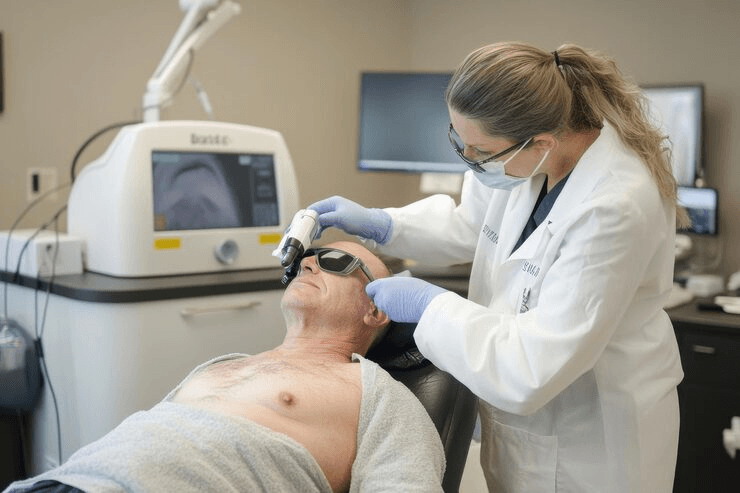
Nobody really thinks twice about laser resurfacing until they are actually considering it. Then suddenly there are a hundred questions and not enough straight answers. The before-and-after photos look convincing. The procedure sounds simple enough. But the gap between what people expect and what actually happens during recovery, or after a session that was not right for their skin, can be pretty significant.
That gap closes when you walk in prepared. Knowing which questions to ask, what your skin actually needs, and what recovery might look like for you specifically changes everything. Finding a skilled laser resurfacing dermatologist in North Miami is a good first step, but it is only part of what determines your outcome.
Clinics like Del Campo Dermatology and Laser Institute have been serving patients across the North Miami area for years, and what sets practices like this apart is not just technical skill. It is the way consultations are handled. Patients who leave understanding their treatment plan, their skin-type considerations, and their aftercare responsibilities tend to heal better and feel better about the overall experience.
There Is No Single “Laser Resurfacing” Procedure
A lot of people come in thinking laser resurfacing is one thing. It is not. It is really an umbrella term covering several different technologies, and each one does something different to the skin.
Ablative lasers take off the outermost skin layers entirely. Results can be significant, but so can the recovery. Non-ablative options skip surface removal and work beneath the skin instead, which means less downtime but usually a more gradual change. Fractional lasers split the difference by treating only a portion of the skin surface at a time, spreading the impact across multiple sessions.
Which of these your dermatologist recommends depends entirely on your skin, your concerns, and your actual schedule. Someone who cannot take five days off work is not a great candidate for a deep ablative treatment. That is a conversation worth having early, not after you have already booked.
Skin Tone Is Not a Side Note. It Is Central to the Decision.
North Miami draws people from all over. Caribbean backgrounds, Latin American roots, South Asian heritage, and everything in between. That kind of diversity in a patient population means a dermatologist needs to be genuinely experienced with a wide range of skin tones, not just comfortable with one.
The reason this matters is straightforward. Certain laser wavelengths and intensities can trigger post-inflammatory hyperpigmentation in medium to deep skin tones. That means dark spots or uneven patches developing after a treatment meant to improve your skin. It does not happen to everyone, and it is entirely preventable with the right approach, but it requires a provider who actually knows how to adjust their technique accordingly.
Do not be shy about asking this directly during your consultation. Something like, “How do you approach laser treatments for my skin tone?” is a completely reasonable question. A provider who answers confidently and specifically is one you can trust.
See also: How Floating Pond Fountains Improve Water Quality and Ecosystem Health
South Florida Sun Is Not Negotiable
This one surprises people. You live here, so sun exposure feels like background noise. But for laser resurfacing, it is one of the biggest variables that affects your results.
Treated skin is fragile. It is more reactive, more prone to pigment changes, and less forgiving of UV exposure than your regular skin is. Most providers ask patients to avoid significant sun exposure for at least a few weeks before treatment and longer afterward. For people in North Miami who regularly spend time outdoors, that takes some actual planning.
Pick your timing thoughtfully. If you are heading into a stretch of beach weekends or outdoor events, that is probably not the right window for a resurfacing treatment. Talk to your provider about when in your calendar this realistically makes sense. That conversation alone can save you from a preventable complication.
Recovery Takes Longer Than the Internet Suggests
Scroll through enough clinic pages, and recovery starts to sound almost breezy. A few days of redness, some peeling, and then glowing skin. For lighter treatments, that is sometimes accurate. For anything deeper, it considerably undersells the reality.
Moderate to deep resurfacing can leave skin visibly raw, swollen, and uncomfortable for a week or more. Going into a client meeting or a social event during that window is genuinely difficult. Some patients also experience tightness, sensitivity to temperature, and an ongoing need to keep the skin moisturized and protected throughout the healing phase.
None of that means it is not worth doing. It means you need to plan around it, honestly. Block the time on your calendar. Arrange for whatever flexibility you need at work. Tell the people in your life what you are doing so they are not surprised by what they see.
What to Actually Ask at Your Consultation
A lot of consultations feel like the provider is driving and the patient is just along for the ride. It does not have to be that way. These are your results and your skin, and the consultation is your chance to get the information you actually need.
Bring these questions with you:
- Which laser type are you recommending for my skin, and what makes it the right fit?
- What does a realistic result look like for someone with my specific concerns?
- What are the possible side effects, and how would you handle them if they came up?
- How should I prepare my skin in the weeks before treatment?
- What does aftercare involve day by day?
Write them down before you go. It sounds obvious, but the consultation environment can feel rushed, and people regularly forget half of what they wanted to ask.
Wrapping Up
Laser resurfacing works well when the right treatment meets the right patient at the right time. For North Miami residents, that means factoring in skin tone, sun exposure, realistic recovery expectations, and the quality of the consultation itself. A practice like Del Campo Dermatology and Laser Institute brings all of those pieces together, but the patients who show up informed are the ones who leave satisfied.