

As enterprise workloads continue to expand in scale and complexity, server memory has become one of the most critical components in modern IT infrastructure. Whether supporting virtualization clusters, artificial intelligence training, cloud platforms, or high performance databases, memory directly influences system speed, stability, and scalability. As processors gain more cores and applications consume larger datasets, the demand for higher bandwidth and greater capacity continues to grow.
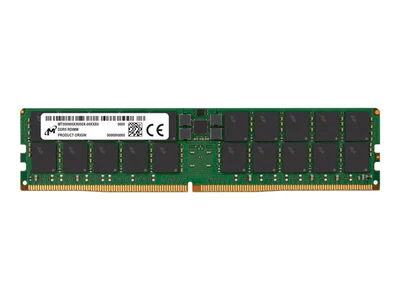
DDR5 server memory represents the next major evolution in DRAM technology. It delivers significantly higher bandwidth, improved power efficiency, enhanced reliability features, and expanded scalability compared to DDR4. However, DDR5 server memory is not a single uniform product. It is available in multiple types, each designed for specific server configurations and workload requirements.
Understanding the different types of DDR5 server memory is essential when planning new infrastructure deployments or upgrading existing systems. Organizations that build and deploy enterprise servers must carefully match memory type to workload demands. Companies such as Saitech build, customize, and integrate enterprise servers using validated DDR5 memory configurations to ensure optimal compatibility and performance for specific business environments.
This article explains the different types of DDR5 server memory, their features, and how they are used in enterprise environments.
What Is DDR5 Server Memory?
DDR5 stands for Double Data Rate 5, the fifth generation of synchronous dynamic random access memory. It is designed to meet the performance and efficiency requirements of modern server platforms.
DDR5 server memory introduces several key improvements:
- Higher data transfer rates compared to DDR4
- Increased module density for greater memory capacity
- Improved power management architecture
- Enhanced reliability features
- Better scalability for high core count processors
Modern server platforms such as Intel Xeon Scalable processors and AMD EPYC processors support DDR5 memory, enabling organizations to take advantage of higher bandwidth and improved parallelism.
DDR5 is specifically engineered for data center environments where uptime, data integrity, and performance consistency are critical.
Why DDR5 Matters for Enterprise Servers
The shift to DDR5 is driven by several technological trends:
- Rapid growth in virtualization density
- Increasing use of AI and machine learning
- Expansion of cloud native applications
- Larger in memory databases
- High transaction enterprise workloads
As CPUs add more cores, memory bandwidth must increase accordingly. DDR5 provides the throughput required to prevent bottlenecks between processors and memory subsystems.
In addition, DDR5 introduces architectural changes such as increased bank groups and on module power management, improving efficiency and stability under heavy load.
Different Types of DDR5 Server Memory
DDR5 server memory comes in several variants based on buffering technology, electrical architecture, and performance design. Selecting the correct type depends on workload, scalability requirements, and platform compatibility.
DDR5 RDIMM (Registered DIMM)
DDR5 RDIMM is one of the most widely deployed memory types in enterprise servers.
Key Characteristics
- Includes a register between DRAM modules and memory controller
- Improves signal integrity
- Supports higher capacity configurations
- Designed for multi socket servers
The register reduces electrical load on the memory controller, allowing systems to support more modules per channel.
Ideal Use Cases
- Virtualization clusters
- Database servers
- Cloud infrastructure nodes
- Enterprise application servers
RDIMMs provide a strong balance between capacity, performance, and stability, making them a common choice in enterprise rack servers.
DDR5 LRDIMM (Load Reduced DIMM)
DDR5 LRDIMM is designed for environments that require maximum memory capacity.
Key Characteristics
- Uses a memory buffer instead of a simple register
- Reduces electrical load more effectively than RDIMM
- Enables higher capacity per module
Because the buffer isolates the memory controller from the DRAM chips, LRDIMMs allow significantly greater memory expansion.
Ideal Use Cases
- In memory databases
- Large scale virtualization environments
- High performance computing clusters
- Data analytics platforms
LRDIMMs are often deployed in systems that require terabytes of RAM per server.
DDR5 UDIMM (Unbuffered DIMM)
DDR5 UDIMM does not include a register or buffer.
Key Characteristics
- Direct connection between DRAM and memory controller
- Lower cost compared to RDIMM and LRDIMM
- Typically lower capacity limits
UDIMMs are generally used in entry level servers and professional workstations rather than large scale enterprise data centers.
Ideal Use Cases
- Small business servers
- Edge deployments
- Development and testing systems
While UDIMMs may offer slightly lower latency, they lack the scalability and signal stability required for large multi socket enterprise servers.
DDR5 ECC Memory
Error Correction Code memory is critical in enterprise environments.
What ECC Does
- Detects and corrects single bit memory errors
- Prevents silent data corruption
- Improves system reliability
ECC functionality is available in RDIMM, LRDIMM, and certain server grade UDIMM configurations.
For industries such as finance, healthcare, and government, ECC is not optional. It is essential for maintaining data integrity and regulatory compliance.
DDR5 MRDIMM (Multiplexed Rank DIMM)
MRDIMM is an advanced DDR5 memory innovation designed to significantly increase memory bandwidth.
Key Characteristics
- Multiplexed memory architecture
- Higher effective data transfer rates
- Optimized for high core count CPUs
MRDIMM technology increases throughput by allowing the memory controller to access multiple ranks more efficiently.
Ideal Use Cases
- Artificial intelligence training systems
- high performance servers computing
- Advanced analytics workloads
- Next generation data center platforms
MRDIMM is emerging in cutting edge enterprise deployments where extreme bandwidth is required.
See also: What Services Does a Fountain Tech Company Typically Offer?
DDR5 3DS DIMM (3D Stacked DIMM)
3DS DDR5 memory increases capacity through stacked DRAM dies.
Key Characteristics
- Higher memory density per module
- Efficient physical space utilization
- Supports very large capacity servers
By stacking DRAM dies vertically, 3DS modules provide greater capacity without increasing physical footprint.
Ideal Use Cases
- Large virtualization clusters
- Enterprise cloud data centers
- Memory intensive analytics platforms
3DS DIMMs are valuable in environments where rack space and power efficiency must be optimized.
Performance Improvements of DDR5 Over DDR4
DDR5 introduces several significant technical enhancements compared to DDR4.
Higher Base Speeds
DDR5 starts at higher default frequencies and scales well beyond DDR4 limits. This results in increased memory bandwidth for modern processors.
Increased Bank Groups
More bank groups allow better parallel processing and improved data handling efficiency.
Improved Power Management
DDR5 shifts power management to the module itself, reducing overall system power consumption and improving voltage regulation.
On Die ECC
DDR5 includes on die error correction at the chip level, enhancing reliability even before system level ECC is applied.
These improvements collectively enable better performance scaling in high density server environments.
Choosing the Right DDR5 Server Memory Type
Selecting the appropriate DDR5 type requires evaluating several factors.
Workload Requirements
Different workloads demand different memory characteristics:
- Virtualization environments typically use RDIMM
- In memory databases benefit from LRDIMM
- Entry level deployments may use UDIMM
- AI and HPC systems may adopt MRDIMM
Capacity Demands
If maximum RAM per server is required, LRDIMM or 3DS DIMM configurations are preferred.
Budget Considerations
UDIMM provides lower initial cost but limited scalability. RDIMM and LRDIMM offer stronger enterprise reliability.
Platform Compatibility
Always verify compatibility with server motherboard, chipset, and processor generation before deployment.
Organizations that build customized server configurations must validate memory support carefully. Saitech builds and integrates enterprise servers with validated DDR5 memory options to ensure optimal system performance and long term stability.
Enterprise Use Cases for DDR5 Server Memory
DDR5 server memory is widely deployed across modern data centers.
Cloud Data Centers
Cloud providers require high bandwidth memory to support multi tenant environments and dense virtualization.
Artificial Intelligence Platforms
AI training systems rely on fast memory access to feed GPUs and CPUs with large datasets.
High Performance Computing
Scientific simulations and modeling workloads benefit from DDR5’s increased bandwidth.
Financial Systems
High frequency trading and transaction systems require low latency and data integrity supported by ECC memory.
Enterprise Applications
ERP, CRM, and database environments require consistent memory performance to maintain responsiveness.
Benefits of Upgrading to DDR5
Organizations transitioning from DDR4 to DDR5 can expect:
- Increased memory bandwidth
- Improved system responsiveness
- Better energy efficiency
- Higher maximum capacity per server
- Enhanced reliability features
For new server deployments, DDR5 provides future ready scalability that aligns with next generation processors.
Conclusion
DDR5 server memory represents a major advancement in enterprise computing. With options including RDIMM, LRDIMM, UDIMM, ECC, MRDIMM, and 3DS DIMM, organizations can tailor memory configurations to meet specific workload and scalability requirements.
From virtualization and cloud infrastructure to AI and high performance databases, DDR5 delivers the bandwidth, efficiency, and reliability required for modern data centers. Selecting the correct DDR5 type ensures optimal performance and long term infrastructure stability.
For organizations planning server upgrades or new deployments, understanding DDR5 memory types is essential to building scalable, reliable systems that support future growth. To explore DDR5 server memory options and receive expert guidance tailored to your infrastructure needs, contact us today.